
This image has been enhanced using AI tools.
Tribal schoolgirls learned menstruation is natural, inspiring them to resist isolating traditions like Kurma.
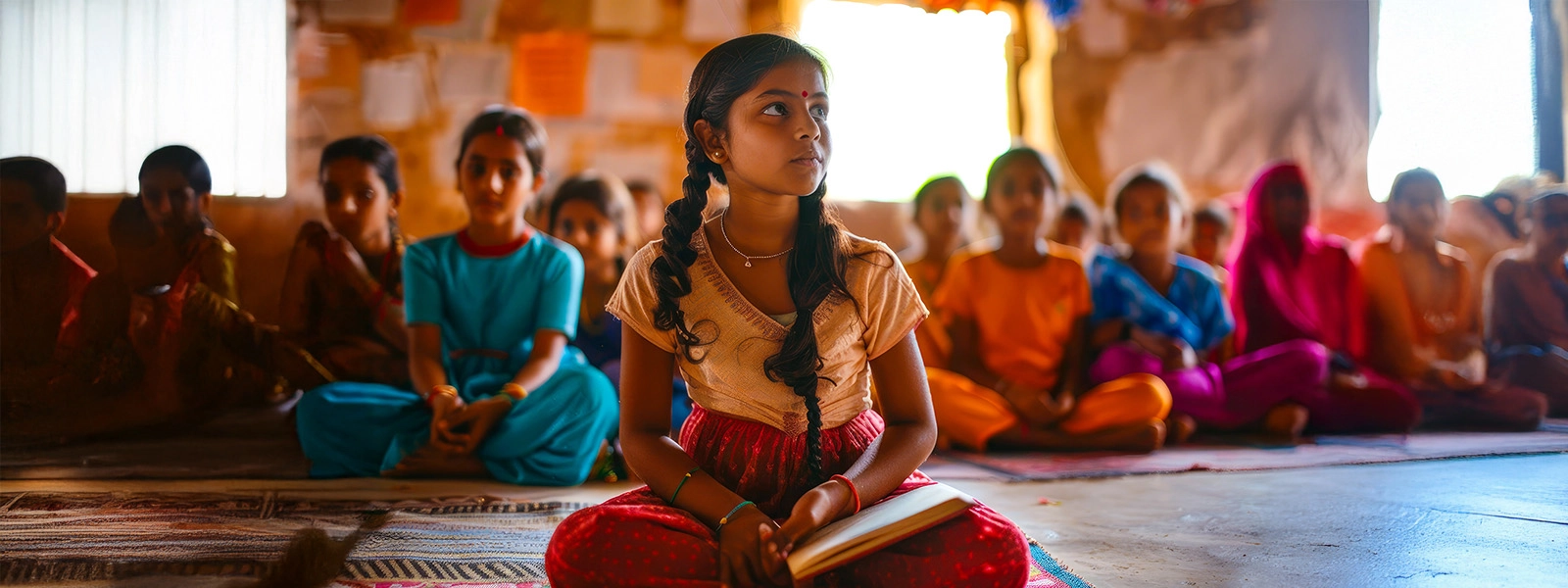
The Ujaas team held a menstruation management workshop at a tribal ashram school. Around 50% of the girls were from the Bhamragad areas, where the practice of Kurma (a term derived from the Madiya language meaning "menstruation") was still in place. In this practice, women are required to stay in a separate hut or Kurma Ghar during their periods. The hut, meant for all menstruating women from young girls to those entering menopause, is where they must remain isolated for five days.
When the Ujaas team spoke to the girls, most of them hadn’t yet started menstruating, but they were aware of the Kurma tradition. Many expressed how uncomfortable they felt about the practice. “We don’t like the idea of being isolated in the Kurma Ghar like our mothers and older sisters. But we’re told it’s mandatory,” one girl shared.
It became evident that these practices were not only physically isolating but also emotionally distressing for young girls who had never been allowed to question the tradition. They wanted to break free from the stigma but lacked the knowledge to challenge it.
The awareness session brought clarity to many misconceptions about menstruation. “We learned that menstruation is a natural process, and there’s nothing to be ashamed of. I never knew how these old rules were harming women’s mental health. I want to speak to my mother and tell her there’s no need to isolate herself,” said another student.
"Education is the first step to breaking taboos and building a more inclusive, respectful society." And this is just the beginning.